How Custom School Uniforms Are Made: OEM Process
How Custom School Uniforms Are Made: OEM Process
An OEM school uniform project moves through a series of approvals. The process works best when the buyer supplies clear requirements and the manufacturer records every confirmed change. Understanding each stage helps schools, distributors and private-label brands plan time, cost and internal decisions.

1. Buyer Brief and Product Definition
The project begins with reference photos, drawings or an existing sample. State which garments are required, the target quantity, sizes, colors, fabric preference, logo, accessories, packaging, destination and desired delivery period.
Separate mandatory requirements from optional ideas. This lets the factory quote the correct base product and any alternatives.
2. Specification and Quotation
The manufacturer converts the brief into a proposed specification. Review every included component, especially when a set contains a shirt, skirt or trousers, tie, bow, suspenders or other accessories.
A useful quotation identifies the product, quantity basis, material, customization, packing, trade term and lead-time assumptions.

3. Fabric, Color and Trim Approval
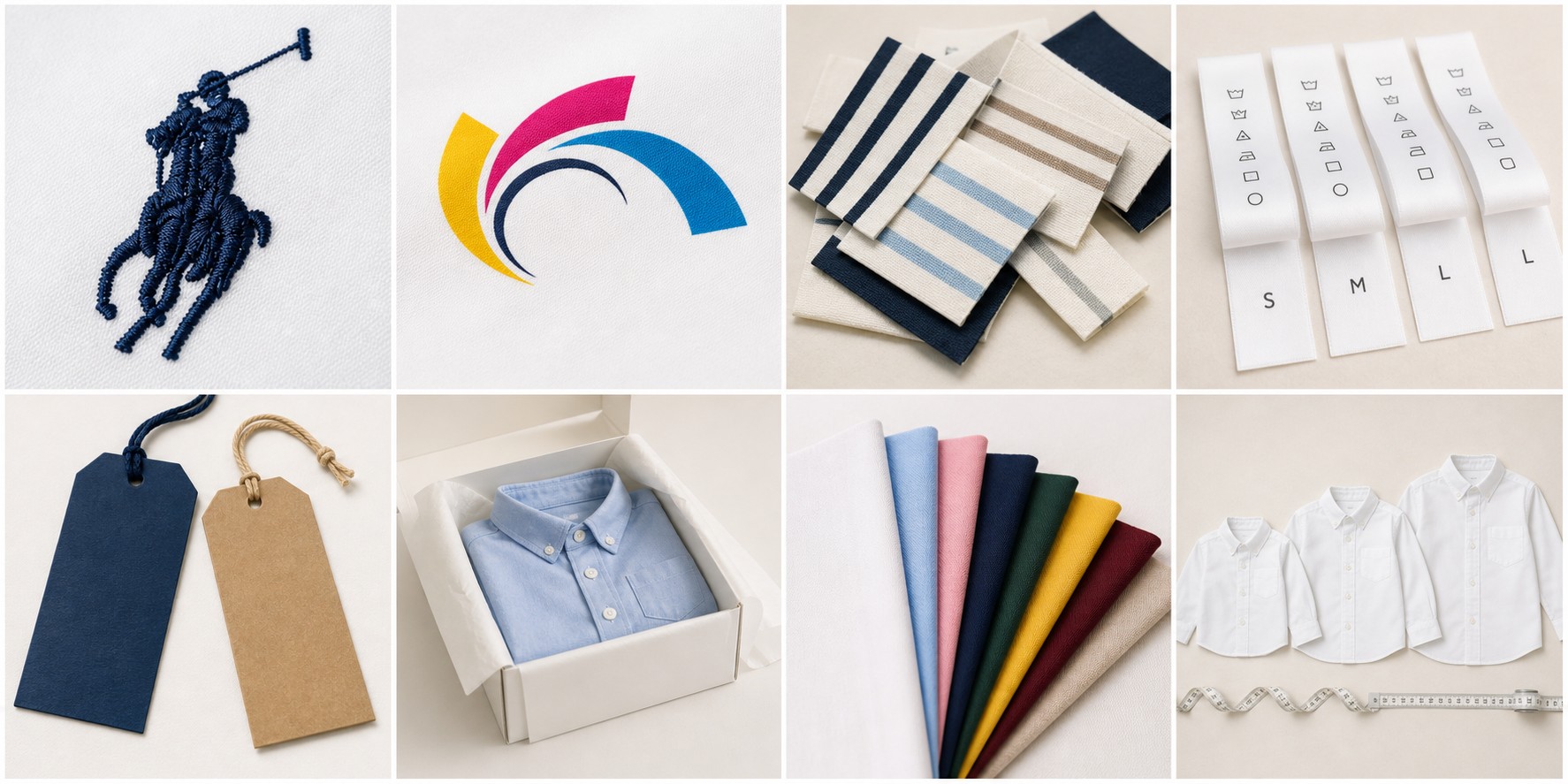
Approve fabric through a swatch, stock sample or developed material as appropriate. Confirm the shirt shade, skirt or trouser color, buttons, sewing thread, zipper, elastic and other trims.
Use physical or standardized color references when close color matching matters. Screen colors alone can be misleading.
4. Pattern and Sample Development
The factory prepares a pattern and sample using the approved brief. Evaluate overall style, fit, measurements, stitching, logo, labels and how pieces work together.
Consolidate feedback into one revision list. Multiple uncoordinated comments can create unnecessary sample rounds.

5. Pre-Production Confirmation
Before bulk cutting, finalize the approved sample, graded size chart, bill of materials, artwork, label text, packing method and quantity breakdown. Resolve open questions in writing.
Guoshun uses confirmed product details as the basis for children’s shirt and school uniform production; the final scope still depends on the buyer-approved order.
6. Production, Inspection and Packing
Bulk work typically includes material preparation, cutting, sewing, finishing, measurement checks, pressing and packing. Inspection should compare production against the approved sample and specification.
After packing, confirm carton marks, quantity and shipping documents. Buyers using their own inspection company should share the inspection standard before production.
Buyer Checklist
- Product photos, drawings or physical reference sample
- Total quantity and breakdown by style, color and size
- Approved garment measurement chart
- Fabric composition, weight, construction and color
- Logo, labels, accessories and packaging requirements
- Destination and expected delivery period
Frequently Asked Questions
What should be approved before bulk production?
Approve the sample, measurements, fabric, colors, logo, labels, accessories, packaging and quantity breakdown.
How many sample rounds are needed?
It depends on the product and clarity of the brief. Organized feedback helps minimize revisions.
Can an existing uniform be used as a reference?
Yes. Provide the physical sample or detailed measurements and identify which elements must remain unchanged.
Start Your OEM School Uniform Project
Tell us the product, quantity, sizes, fabric, colors, logo, packaging and destination for a project-specific quotation.
WhatsApp +86 139 5125 1065Send Email